


December is a month of contrasts — light and darkness, warmth and rush, closeness and exhaustion. It’s a month that holds two realities at once: the warmth of lights, gatherings, scents, softness… and the pressure of deadlines, obligations, expectations, and emotional load that quietly grows as the year ends.
For a long time, I believed these two worlds couldn’t coexist. Then I spent 15 years studying endocrine-disrupting chemicals (EDCs) — invisible substances that influence our hormones, metabolism, immune system, fertility and even mood — and learned something surprising:
a healthy holiday season doesn’t require perfection. It requires awareness.
And awareness doesn’t take time we don’t have. It simply changes the way we move through what’s already there.
So I created 12 holiday principles—a concise, quick-to-read list that offers clarity in the holiday rush. Not one principle for every month of the year, but an analogy:
a structured little guide for a season that often feels chaotic.
A way to pause, breathe, and choose intentionally — even when everything else is fast.
These principles aren’t here to judge or overwhelm you. They’re here to simplify. They’re here to help you feel better in your home, in your body, and in this busy, emotional, magical month.
Let’s walk through them together.
1. Natural Scents Instead of Aerosols and Scented Candles

Holiday scents are nostalgic, comforting, and calming — but many commercial products are built on synthetic fragrances stabilized with phthalates. These compounds cling to dust, air, and surfaces, subtly altering indoor air quality.
Instead of aerosols or strongly scented candles, I simmer a pot of water with cloves, cinnamon, orange peel, and a few pine branches. It fills the home with warmth without exposing the lungs and hormonal system to volatile chemicals. It’s safe, grounding, and reminiscent of old traditions.
For babies, pets, and anyone with sensitive airways, this natural approach makes a noticeable difference.
Warning! Be careful with using essential oils if you have pets, especially birds, as they can irritate the airways and cause severe health problems.
2. Holiday Decorations: Less Plastic, More Harmony

It’s tempting to buy new decorations every year. But many inexpensive ornaments — especially soft PVC chains, glittery pieces, and shiny figurines — release microplastics, phthalates, and flame retardants into indoor dust.
This isn’t about eliminating beauty; it’s about choosing beauty that doesn’t cost your health.
I decorate using:
- glass ornaments that last decades
- wooden and paper decorations
- metal accents
- baked cookies and gingerbreads
- dried fruits
Minimalism brings calmness, and calmness is a rare gift in December.
3. Children’s Gifts Without Soft PVC

Children explore with every sense: touching, squeezing, chewing, and sleeping with toys under their arms. When toys are made of soft PVC, this intimate contact increases exposure to phthalates and flame retardants. This is not suitable for growing organisms with a still-developing endocrine system.
Wooden toys, puzzles, books, science kits, and building sets — these not only last longer but also accumulate fewer chemicals in household dust.
And the truth is simple: children don’t remember how expensive or „modern” a toy was. They remember whether it made them feel creative, engaged, or loved.
4. Never Heat or Store Food in Plastic
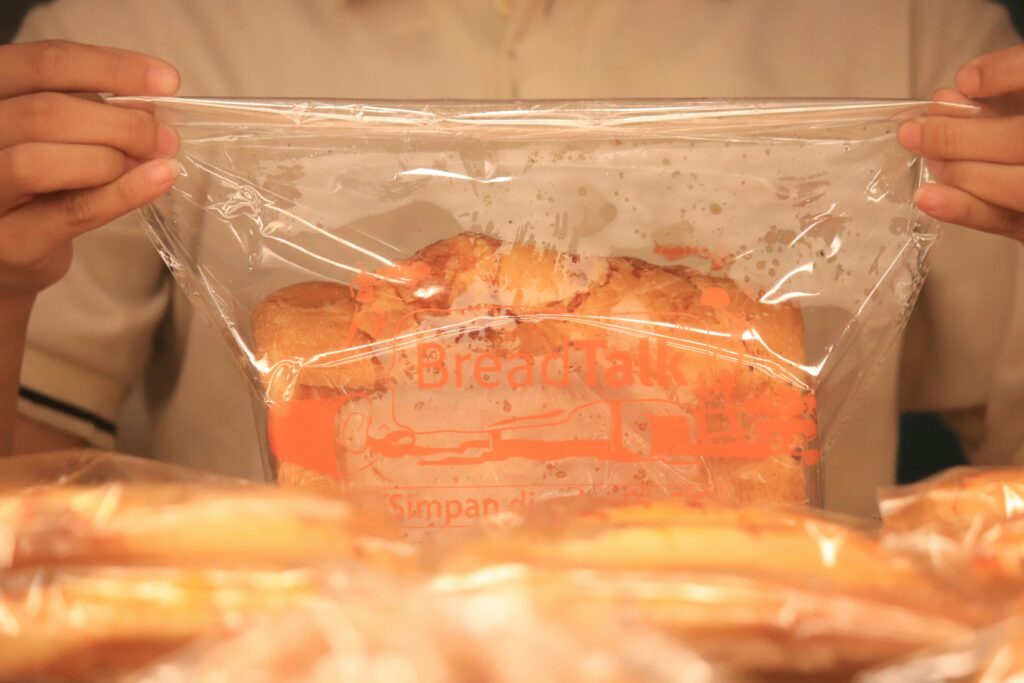
In winter, we cook more, reheat more, and store more leftovers. But heating plastic accelerates the migration of bisphenols and phthalates into food — especially into fatty, warm dishes typical of December.
So I always transfer dishes and leftovers to glass or ceramic containers.
It takes the same amount of time as closing a plastic lid — the only thing that changes is the safety of what you eat.
This single habit has one of the most significant impacts on reducing EDC exposure at home.
5. Choose PFAS-Free Baking Paper
6. Real Christmas Tree — or Air Out the Artificial One

Artificial trees may contain PVC, phthalates, and flame retardants. If you use one, let it off-gas on the balcony before bringing it indoors. You can also put the tree under a shower to wash the whole year’s dust with a cocktail of chemicals.
Personally, I choose a natural tree: it smells beautiful, brings a sense of nature indoors, and avoids synthetic dust altogether.
7. Wrap Gifts Without Glitter or PVC Film
Gift-opening is chaotic fun — and the moment when glitter and microplastics spread fastest.
PVC films, metallic foils, and plastic ribbons may look festive, but they shed particles that linger long after the holidays.
Kraft paper, natural twine, dried citrus slices, sprigs of pine or rosemary…
this simple aesthetic feels modern, elegant, and eco-friendly.
It also teaches children a subtle lesson about mindful celebration.
8. Holiday Cleaning Without Synthetic Fragrances
December cleaning is a cultural ritual — fresh linens, polished floors, tidy corners.
But many cleaning products combine fragrances stabilized with phthalates and “antibacterial” additives that affect thyroid function.
I choose fragrance-free cleaners or eco-certified ones. Often, I make my own with vinegar, citrus peels, and soda — it works exceptionally well, especially on kitchen surfaces.
And the home feels clean, not chemically scented.
9. Avoid “Limited Edition” Holiday Cosmetic

Festive cosmetics often contain extra fragrance, dyes, and shimmer ingredients — all of which increase skin and hormonal load. Winter already stresses the skin with dryness and temperature changes; adding new fragrance-heavy products can cause irritation or sensitization.Sticking to your usual routine is a quiet form of self-care.
Except for one small indulgence: for example, winter bath salts. With thoughtful ingredients, they can be a gentle ritual of rest.
10. Hot Food Never Touches Plastic — Ever

Heat changes everything. When hot food comes into contact with plastic, endocrine-disrupting chemicals can migrate rapidly into the meal. It’s one of the fastest and most underestimated pathways of exposure.
Winter meals are often warm, fatty and comforting — exactly the conditions that increase chemical transfer. That’s why I treat this as a non-negotiable rule.
I use glass, ceramic or stainless-steel containers at home and bring my own when ordering take-away. Pizza boxes and styrofoam count too — if food is hot, it deserves a safer surface.
This isn’t about restriction. It’s a quiet, protective habit — one that supports hormonal balance with almost no extra effort.
11. Five Minutes of Micro-Ventilation

When heating is on, indoor air quietly changes. Pollutants concentrate, plastic dust accumulates, and ventilation often drops — exactly when we spend more time inside.
Five minutes of short, intense ventilation twice a day can significantly improve indoor air quality. It reduces airborne chemicals, supports oxygen balance, and eases the load on the respiratory and hormonal systems.
This small ritual matters most for babies, pets, and anyone with thyroid or airway sensitivity — but in truth, it benefits everyone.
12. December Is Not a Competition — Small Choices Matter
Exposure to endocrine-disrupting chemicals builds quietly, day by day — often without us noticing. But the good news is just as quiet and just as real: even small, conscious changes can bring measurable benefits. The goal is never perfection. It’s awareness. Balance. And gentle, thoughtful care for your body, your home, and the people you love.
As the year comes to a close, I wish you a holiday season that feels lighter — not fuller. One where your home supports rest instead of pressure, and your choices come from care, not obligation. You don’t need to change everything. You don’t need to do more. You only need to choose what truly serves you.
Because holiday magic doesn’t live in flawless decorations or perfectly planned moments.
It lives in the warmth of the air, the quiet of an evening, the scent of something baking, and the feeling of safety in your own space.
So my wish for you is simple: May your holidays be calm, intentional, and kind to your body.
May your home be a place where you breathe easier and think clearer.
And may this season remind you that health, peace, and presence are the most beautiful gifts we can give — to ourselves and to those we love.
Warmth. Light. Care. That is more than enough.
If you have any questions or need more information, please write to Dr Aleksandra at askdraleksandra@detoxed.eu or contact us directly via Instagram @AskDrAleksandra.
Scientifically proven studies:
Steinemann A. Fragranced consumer products: exposures and effects from emissions. Air Qual Atmos Health. 2016;9(8):861-866
Moreira MA, André LC, Cardeal ZL. Analysis of phthalate migration to food simulants in plastic containers during microwave operations. Int J Environ Res Public Health. 2013 Dec 30;11(1):507-26
Yurtsever, M. Glitters as a Source of Primary Microplastics: An Approach to Environmental Responsibility and Ethics. J Agric Environ Ethics 32, 459–478 (2019).
Per and poly-fluorinated chemicals (PFAS) | OECD
Chang C, Gershwin ME. Indoor air quality and human health: truth vs mass hysteria. Clin Rev Allergy Immunol. 2004 Dec;27(3):219-39
John N. Hahladakis, Costas A. Velis, Roland Weber, Eleni Iacovidou, Phil Purnell, An overview of chemical additives present in plastics: Migration, release, fate and environmental impact during their use, disposal and recycling, Journal of Hazardous Materials, Volume 344, 2018, Pages 179-199,
