


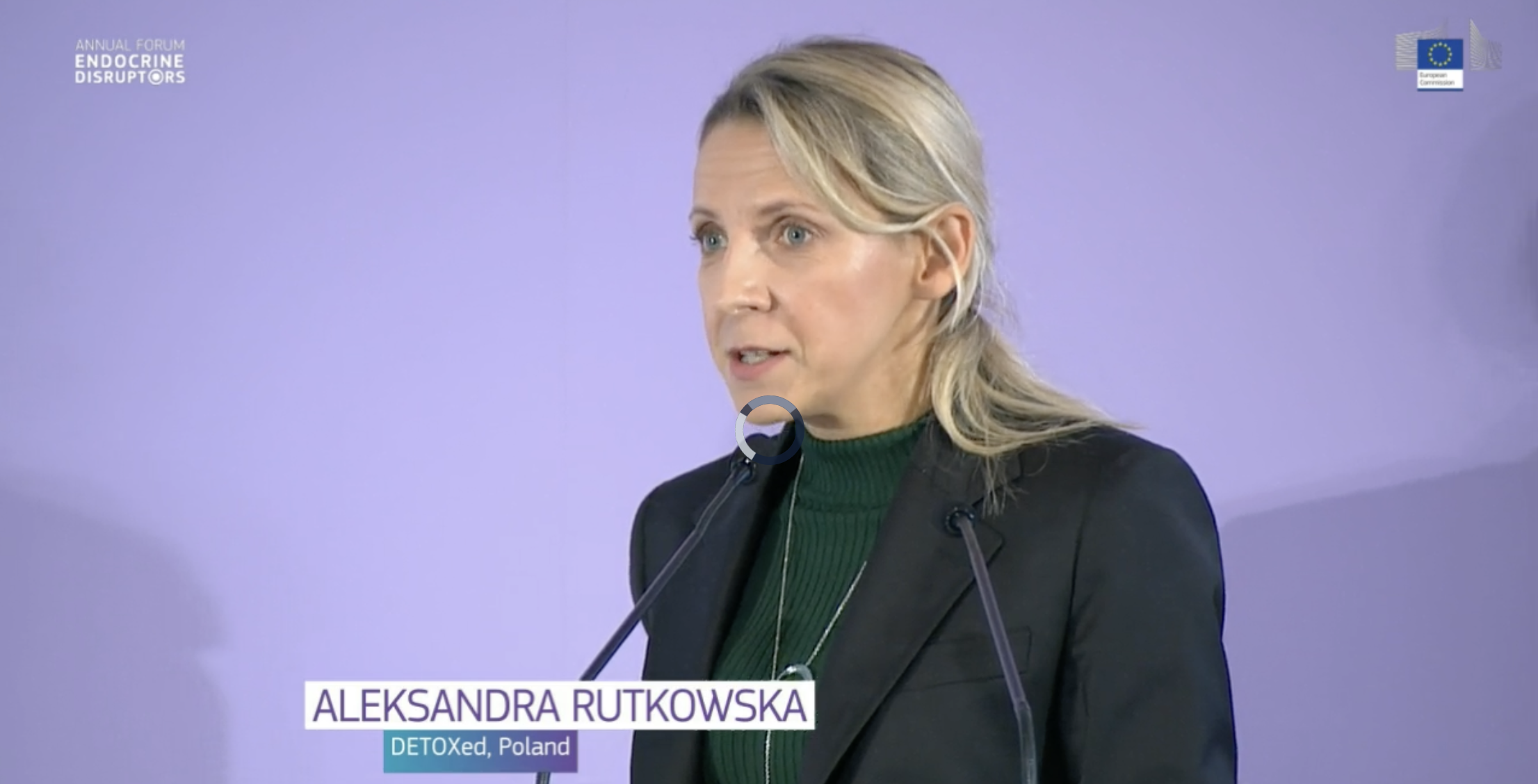
Join LIFE ChemBee Scientific Event on 20 May 2026 (13.00 – 15.00 CET) — a focused scientific meeting on endocrine-disrupting chemical (EDC) exposure in the One Health framework, with emphasis on real-world implementation and measurable outcomes.
LIFE ChemBee is an EU LIFE project advancing evidence-based prevention of EDC exposure using a data-driven approach. Through the CheckED app, we integrate education with exposure profiling and longitudinal monitoring of behavioural change. This is not a typical awareness initiative. It is an implementation framework supported by measurable outcomes.
Why it matters for researchers
- Endocrinology & Metabolic Health: real-world population data on EDC exposure, dominant exposure sources, and feasibility of exposure reduction without costly interventions; opportunities for replication, endocrine-method papers, and clinical translation/pilots.
- Exposure Science / Environmental Health / Exposome: a pragmatic exposure profiling framework; mapping modifiable sources (indoor environment, consumer products, food-contact materials); implementation evidence for scalable exposure reduction; collaboration on harmonised metrics and mixtures/exposome modelling.
- Human Biomonitoring & Analytical Chemistry: a bridge between app-based exposure profiles/behaviour interventions and biomonitoring validation; collaboration on validation datasets, predictive modelling (behaviour → biomarker burden), and harmonisation with HBM4EU/PARC.
- Implementation Science, Health & Preventive Medicine: proof that exposure can be reduced without fear-based messaging, through micro-level behaviour change with measurable outcomes; a strong case for One Health implementation science, impact evaluation, and optimisation of digital prevention mechanisms.
Why it matters for NGOs
- From awareness to action: concrete evidence that NGO-led prevention work can achieve with measurable exposure reduction – it is not just raising awareness.
- Practical tools for advocacy and programmes: a validated, low-threshold framework to support education, behaviour change, and community-level implementation.
- Policy-relevant evidence: real-world data that can strengthen advocacy on chemicals policy, consumer safety, and preventive health within a One Health framing.
- Scalable collaboration opportunities: potential for replication, local adaptation, and integration into existing NGO campaigns, projects, and networks across countries.
The event is designed for listening, critical discussion, and exchange of methods and perspectives. Following the scientific session, we will host an open networking segment to explore potential next steps — including future collaborative analyses where relevant.
Online event – 20 May 2026, 13.00 – 15.00 CET
For more information contact: Fee Widderich

