LIFE ChemBee Ambassadors for Europe
Detoxifying European Households
LONG-TERM EXPOSURE TO CHEMICAL COCKTAILS
We spend most of our time indoors. We are exposed to thousands of chemicals through the products we own or use on a daily basis.
MANY HAZARDOUS CHEMICALS ARE RIGHT INSIDE YOUR HOME
Cleaning products, cosmetics and consumer goods release substances that end up in our bodies and the environment, sometimes causing irreversible damage. The key is to choose the products we surround ourselves with wisely. And make lifestyle choices that protect our health and save the planet.
The Chemical Ambassadors Success Story
The project has successfully mobilised citizens, municipal workers, and policymakers across Europe to reduce exposure to hazardous chemicals. By turning scientific knowledge into everyday action, the project has proven that informed communities are the ultimate catalyst for a safer, healthier future.
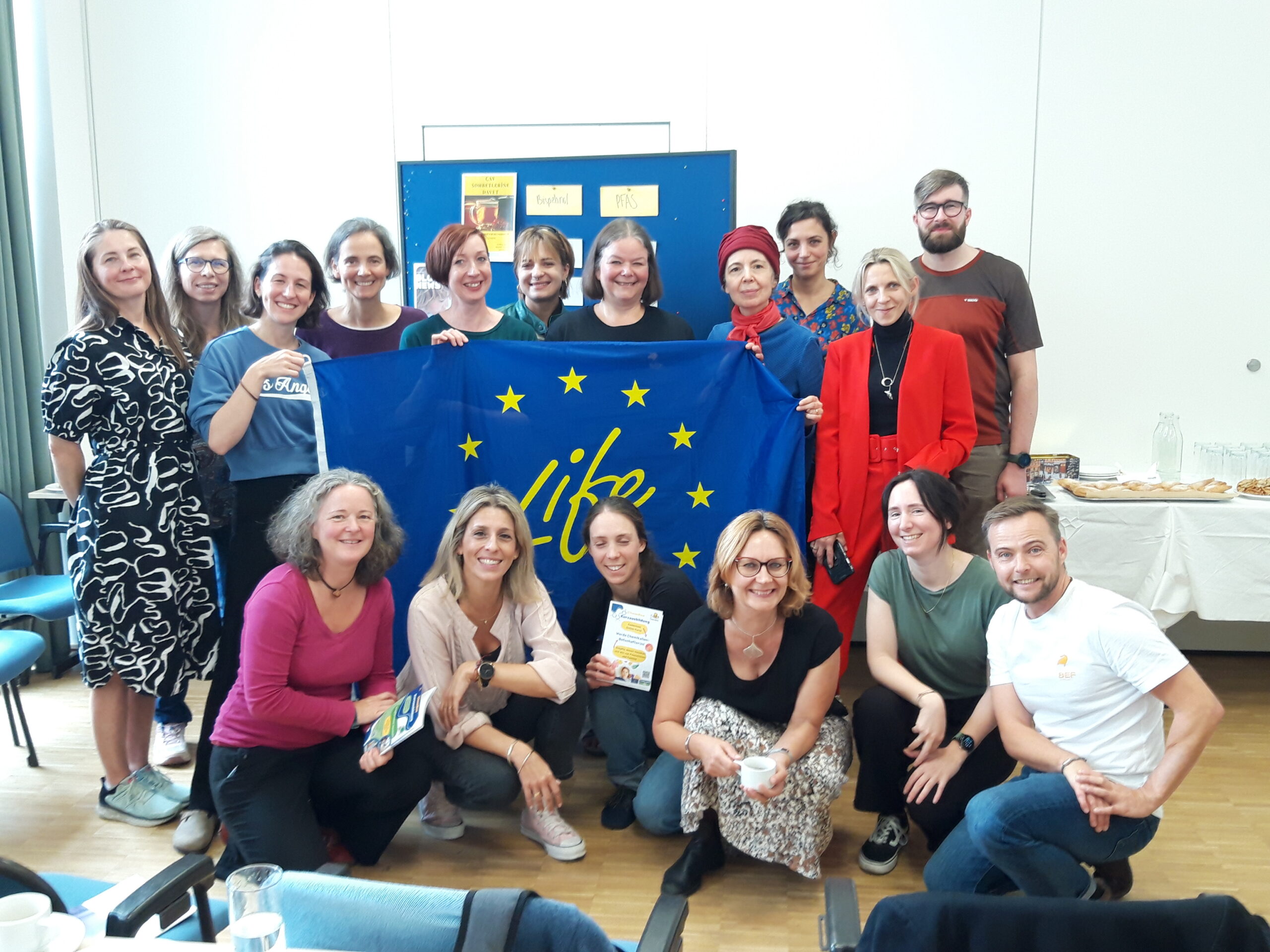
At the heart of LIFE ChemBee’s success was a massive network of almost 3,000 “LIFE ChemBee Ambassadors.” Trained as frontline health and environment educators within their own communities, these volunteers learned to identify hazardous substances in everyday products—such as Endocrine Disrupting Chemicals (EDCs) and CMRs (Carcinogenic, Mutagenic, or toxic to Reproduction substances)—and promoted practical, safer alternatives.
Spanning eight countries, the project developed more than 1,400 social media initiatives with a cumulative reach of 9,8 million EU citizens, while 25,000 people registered for safety courses, and 3,000 “Chemical Ambassadors” were trained as frontline health educators.
Discover regional best practices and inspiring transformation stories in “CHEMICALS AMBASSADORS IN EUROPE – a success story on consumption behaviour change”.
Shifting Consumer Behaviour: Simple Actions, Big Results
Can everyday consumers master complex toxicological information? Yes. LIFE ChemBee proved that empowered consumers quickly become active drivers of demand for safer products.
Our findings show that behavior change thrives when recommendations are prioritised, feasible, and linked to daily routines—such as swapping plastic kitchenware for wood or stainless steel. However, the project also highlighted that consumer willingness hits a wall when safer market alternatives are missing, or when economic factors restrict choices.
Deep dive into how and why end-users drive market change in “Do end-users matter?” and its accompanying Executive Summary.
Systemic Change & Policy Action: Beyond Individual Vigilance
While consumer awareness is vital, protecting public health cannot depend on individual vigilance alone. Placing the burden of safety entirely on the consumer is neither fair nor realistic, especially when considering social justice and affordability.
To achieve a truly sustainable, toxic-free transition, the safer choice must become the easier, cheaper, and default choice on the market.
Read the Policy Paper: Learn why top-down market transitions and stronger regulatory actions are critical in “Towards a Toxic-Free Living Environment – Why Everyday Exposure to Hazardous Chemicals Requires Stronger Action”.
Are you worried about hidden hormone-disrupting chemicals? The CheckED app is your personal ally! In just a few minutes, you can find out how much you are potentially exposed to harmful chemicals, and receive personalised results and practical recommendations based on your lifestyle.
Empower yourself to make informed choices for your health and the environment. Do a household check with the CheckED web app and
discover valuable, simple tips to create a healthier, cleaner environment for yourself and your loved ones.
CHECK YOUR EXPOSURE WITH THE CHECKED WEB APP
The LIFE ChemBee project adapted the CheckED web app, originally developed by the predecessor project NonHazCity (INTERREG). This tool engages directly with ambassadors and their communities to survey the products and materials in
their homes, bring them together, decide what to change, and then monitor the progress of these changes.
The tool has been tested and used by almost 10,000 households across most EU member states.
The Eco-Supporters Model: Transforming Municipalities
To drive sustainability from the inside out, LIFE ChemBee successfully adapted Finland’s proven “Ekotuki” (Eco-Support) operating model for public organisations in Greece and France. By training municipal employees to act as internal sustainability ambassadors, high-level environmental goals were translated directly into everyday workplace habits.
Regional Highlights
Greece: Expanded from 2 pilot municipalities to 9 additional local authorities and an entire region. Participants received modular training, specialized guidebooks, and 15 targeted thematic handouts.
France: Engaged 15 local authorities, public bodies, water syndicates, and health insurance funds, specifically targeting EDCs and aligning safety with regional health strategies.
Finland: Supported the expansion by hosting international exchange visits and conducting advanced training for over 400 participants, including 165 kindergarten directors.Eco-Supporters at municipalities”.
The training sparked a profound cultural shift that extended far beyond the office walls. Notably, 60% of participants reported taking these toxic-free habits home to protect their families.
Furthermore, municipalities leveraged Green Public Procurement (GPP) as a strategic lever—embedding toxic-free standards directly into public purchasing decisions to institutionalize long-term environmental health.
Learn how localised outreach and peer-to-peer engagement drive organisational sustainability in the report “Eco-supporters at Municipalities”.
Education of Chemicals Ambassadors in Turkish and Arabic speaking communities
At a smaller scale, partners in Germany, Austria and Sweden carried out trainings for the Turkish, Arabic and Somali speaking immigrant communities. Yeşil Çember organised 18 trainings in the form of tea salons and provided online lectures for Turkish speaking medical professionals.
Are You Ready to Start?

Latest Blog Articles:
Dr Aleksandra Rutkowska is a scientist (biotechnologist with faculty of molecular medicine) and inventor.
Dr Aleksandra Olsson is a clinical dietician, scientist and an educator.


Blog Articles by Dr. Aleksandra
• Cozy Holiday Season, Clear Mind and Safe Hormones: A Scientist’s Guide to Low-Toxin Winter Living
• Cozy Autumn, Hidden Hazards: How to Keep Your Pets – and Yourself – Safe from Hormonal Cheaters
• Spring Detox: Cleanse Your Body from Plastic and Hormonal Cheaters in Just 3 Weeks
• One Health: How My (and Your) Daily Choices Can Shape Human, Environmental and Wildlife Health
• Empowering Prevention: How Knowledge of Endocrine Disruptors Can Help Reduce Breast Cancer Risk
The project LIFE ChemBee (No. LIFE21/GIE/DE/101074245) is funded by the LIFE Programme of the European Union. Views and opinions expressed are however those of the project LIFE ChemBee only and do not necessarily reflect those of the European Union or the LIFE Programme. Neither the European Union nor the granting authority can be held responsible for them.
PROJECT INFO: • Reference: LIFE21-GIE-DE-LIFEChemBee/101074245 • Start Date: 01/10/2022 • End Date: 31/03/2026 • Total Budget: 1,999,645 € • EU Contribution: 1,199,787 €

Project Partners

BEF-DE was founded in Hamburg in 2003 as a non-profit association and chairs the “BEF Group”, an international network with offices in Riga (Latvia), Tallinn (Estonia) and Vilnius (Lithuania). BEF-DE has 18 years of experience in developing and managing projects, mainly funded by the EU. Since its foundation BEF-DE has implemented 45 projects (250 for the whole BEF group) in the fields of chemicals and waste management, water quality, nature, species and marine protection, energy efficiency, sustainable mobility and climate change.

Established in 2004, ECOCITY is an association whose mission is to set standards and ensure the promotion and adoption of best practices in environmental protection in Greece. ECOCITY has participated in the LIFE AskREACH project, organised one of the pioneering conferences on the circular economy in Greece and provides advice to municipalities on planning their circular economy roadmaps.

Established in 2015, ZERO focuses on both policy advocacy and projects that can help show that alternatives are possible. ZERO has been involved in the LIFE AskREACH project and is a member of several working groups of international organisations such as Zero Waste Europe and the European Environmental Bureau (EEB), particularly on the topic of plastics and chemical pollution.

RES was created in 2009 with the aim of putting Environmental Health at the heart of public policies. Its first campaign led to the banning of Bisphenol A in baby bottles in France and in the European Union as a whole. RES’s action also led to the banning of perchloroethylene in dry cleaners, the adoption of the National Strategy on Endocrine Disruptors, and the charter for Cities and Territories without Endocrine Disruptors.

Founded in 1982, G2000 is the leading Austrian environmental organisation with 60,000 members. G2000 has extensive experience in coordinating projects with different partners and stakeholders in international campaigns.

Turku UAS is a higher education institution of 12,000 experts, researchers, students, faculty members and teaching professionals. We create solutions for a better tomorrow – both regionally and globally. Our graduates are practice-oriented professionals with top competencies. Turku UAS Water and Environmental Engineering research groups one focus area is hazardous substances and the group e.g. works with identification of pollutant sources and pathways in urban water cycle and it organises training on hazardous substances management for different target groups.
FKO (eng. Buy Responsibly Foundation-BRF) is a Polish organisation that has focused on ethical and ecological alternatives since 2002. FKO implements information and education projects for consumers, companies, media, decision-makers, teachers, pupils and students etc.

Founded in 1994, the Swedish Consumers’ Association is a federation of 21 member organisations in Sweden. We represent the interests of Swedish consumers at national, regional and international level. We are active members of the European consumer organisation BEUC, Consumers International and ANEC – the European Consumer Voice in Standardisation.

DetoxED, a pioneering start-up founded in Gdansk, Poland, in 2016, that provides solutions for determining the presence of endocrine disruptors, estimating exposure and providing individual recommendations for reducing it. This project uses the advanced CheckED application, developed by DetoxED within the LIFE ChemBee and Interreg NonHazCity 3 projects, to empower individuals with science-backed insights for a healthier, toxin-free life.

Yesil Cember has been training Turkish and Arabic speakers to become environmental and food ambassadors for almost 15 years, has run projects with many households on environmental topics (energy saving, waste reduction, healthy eating) and has extensive experience in developing educational materials and courses.

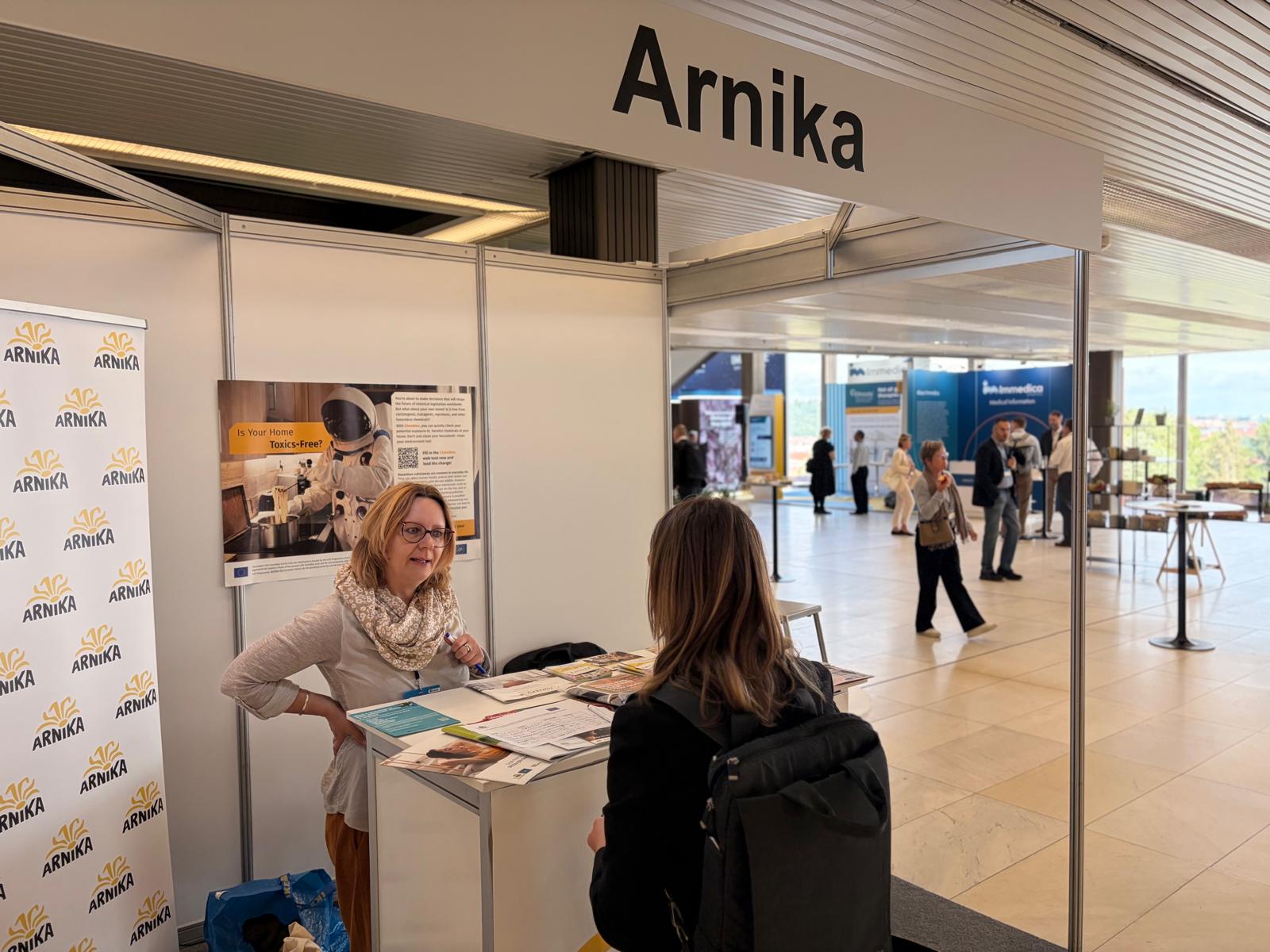
Arnika is an association founded in 2001 that focuses on the fight against chemical pollution, both industrial and from everyday products. Arnika has a strong policy advocacy activity and regularly carries out chemical testing of consumer products.